Choosing the right technology stack can make or break an ambitious indie project, and the recent discussions surrounding the Wonderful Neoran Valley engine have put technical development squarely in the spotlight. When Nara Studio set out to build their monster-taming roguelite, evaluating the Wonderful Neoran Valley engine capabilities became vital to handling complex timelines, 3D visuals, and dynamic combat systems.
Understanding the Technical Foundation
When developers and fans look under the hood of upcoming indie titles, engine selection is always a hot topic. Nara Studio’s decision to build their creature-collecting adventure using industry-standard tech shaped the entire production pipeline. Below is a quick overview of the technical parameters surrounding the game’s production.
| Project Attribute | Detail |
|---|---|
| Lead Developer | Nara Studio |
| Primary Platform | PC (Steam), Switch 2, PlayStation 5 |
| Game Engine | Unreal Engine |
| Genre | Monster Collector Roguelite |
Community reports and developer breakdowns highlight that choosing a robust framework allows small teams to punch well above their weight class. Building an entire 3D world complete with time-manipulation mechanics requires a robust toolset.
Why Unreal Engine Fits the Vision
Opting for a high-performance framework brings distinct advantages to modern game design, especially when aiming for high-end 3D aesthetics. The development team avoided older or more restrictive pipelines in favor of a modern architecture capable of handling heavy visual assets, lighting models, and particle systems.
| Engine Aspect | Benefit to Nara Studio | Impact on Gameplay |
|---|---|---|
| Visual Fidelity | Advanced lighting and shader support | Polished 3D environments and clean character models |
| Blueprint System | Rapid prototyping and logic routing | Faster iteration on core combat loops |
| Scalability | Smooth multi-platform deployment | Seamless transitions to console ports |
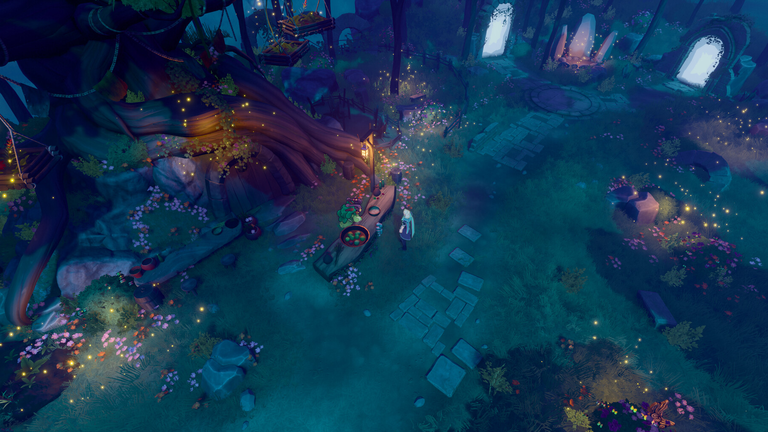
Player experience feedback from early vertical slice showcases indicates that the graphical fidelity is surprisingly high for an indie team. The choice to leverage this specific technology allowed artists and programmers to craft atmospheric lighting and distinct creature designs without hitting performance bottlenecks.
Comparing Development Frameworks
For indie studios tackling 3D projects, selecting the right software environment dictates workflow efficiency. While some developers gravitate toward lighter tools, larger ambitions often demand enterprise-level solutions.
| Software Option | Strengths | Weaknesses for 3D Roguelites |
|---|---|---|
| Unreal Engine | Exceptional 3D rendering, blueprint scripting | Steeper learning curve, higher baseline overhead |
| Unity | Lightweight, highly flexible | Requires more custom tool creation for advanced visuals |
| Godot | Great for 2D and lightweight 3D | Limited out-of-the-box support for cinematic 3D pipelines |
By selecting a robust technological framework, Nara Studio ensured their combat timelines and interactive dialogue mechanics could run smoothly alongside complex graphical shaders. You can learn more about their official updates and wishlist the game directly on the Steam Store Page.
Combat Systems and Engine Performance
The core loop of Wonderful Neoran Valley relies heavily on a predictive timeline mechanic, where players scout enemy turns and execute tactical moves in advance. Managing state data across multiple combatants requires strong backend performance.
| System Feature | Technical Requirement | Engine Handshake |
|---|---|---|
| Timeline Prediction | Real-time state tracking | Efficient event dispatching |
| Synapse Mechanic | Multi-entity data binding | Blueprint script execution |
| Dynamic Spawns | Procedural generation logic | Object pooling and management |
When players chain complex creature abilities together, the software must process data instantly to prevent frame drops during high-impact animations. The underlying framework handles these intensive calculations gracefully, ensuring that tactical planning remains smooth even when screen effects flare up.
Frequently Asked Questions
What is the Wonderful Neoran Valley engine?
The game is developed using Unreal Engine, which provides the 3D rendering power and scripting tools necessary for its complex tactical combat and visual style.
Is Unreal Engine difficult for small indie teams?
While it has a steeper learning curve than some lightweight alternatives, its blueprint system allows designers and programmers to prototype and build systems much faster once mastered.
Will the game run well on consoles?
Yes, the technical architecture has allowed Nara Studio to target multiple platforms, including PC, PlayStation 5, and Nintendo Switch 2.